

71 A, Suriya Hospital, Puliyangudi, Tenkasi - 627855
Newborn jaundice is common during the first days of life. A baby may develop a yellowish colour on the skin or the whites of the eyes as bilirubin builds up in the blood. In many newborns, the level decreases naturally as the baby feeds and the body becomes better at processing bilirubin. However, some babies develop higher levels that need medical assessment and treatment.
At Surya Hospital, Puliyangudi, phototherapy is provided as part of newborn jaundice treatment when medical assessment indicates that treatment is appropriate. The decision is not based only on how yellow the baby looks. The baby's age, bilirubin level and individual circumstances all matter.
Bilirubin is produced when red blood cells naturally break down. Newborns have a relatively high turnover of red blood cells, while their developing liver may not yet process bilirubin as efficiently as an older child's or adult's liver.
This can result in neonatal jaundice, particularly during the first few days after birth.
Jaundice can have different causes and levels of severity. That is why it is important to distinguish ordinary newborn jaundice from situations where bilirubin requires closer monitoring or treatment.
No. Mild jaundice is common in newborn babies and does not always require phototherapy. What matters is how high the bilirubin level is and whether it is rising in a way that requires treatment.
Some babies, however, need more careful evaluation. Factors such as being born prematurely, feeding difficulties, blood-group incompatibility or certain medical conditions can influence bilirubin levels and the baby's risk.
Parents should therefore avoid assuming that jaundice is harmless simply because it is common—or assuming that every yellow appearance requires phototherapy.
One important point for parents is that the intensity of yellow colour on the skin does not reliably tell you how high the baby's bilirubin level is.
A healthcare professional may assess the baby and recommend bilirubin testing when appropriate. The result can then be considered alongside the baby's age in hours, gestational age and other relevant risk factors.
This is why newborn jaundice should be evaluated medically rather than judged by skin colour alone.
Assessment generally begins with examining the baby and understanding the baby's feeding, behaviour and overall condition. When bilirubin measurement is required, the healthcare team may use an appropriate bilirubin test.
The treatment decision is then based on the clinical picture and bilirubin level rather than on one factor in isolation.
These questions can help parents understand why a particular course of care has been chosen.
Phototherapy may be recommended when a newborn's bilirubin level reaches a treatment threshold appropriate for the baby's age and clinical circumstances. It is a commonly used medical treatment for significant neonatal hyperbilirubinemia.
The important point is that there is no single bilirubin number that applies to every newborn. Treatment thresholds can vary according to factors such as the baby's age, gestational age and risk factors.
Therefore, a baby with jaundice should be assessed individually before deciding whether phototherapy is necessary.
No. Not every newborn with jaundice needs phototherapy.
For some babies, healthcare professionals may recommend observation, feeding support and repeat bilirubin assessment instead of immediate treatment. For others, phototherapy may be appropriate because the bilirubin level has reached the relevant treatment threshold.
This distinction is important because phototherapy is a medical treatment—not simply a precaution that every jaundiced newborn should receive.
Certain newborns may require closer attention to bilirubin levels. This can include babies who are born prematurely or babies who have difficulty feeding or have other factors that may increase the risk of significant jaundice.
A baby's clinical condition and bilirubin trend are more useful than trying to predict severity from appearance alone.
If parents notice increasing yellowing, poor feeding, unusual sleepiness or changes in the baby's behaviour, they should seek medical advice rather than waiting for the jaundice to disappear on its own.
Age can influence fertility, particularly because the number and quality of eggs change over time. This is one factor a doctor may consider when discussing fertility evaluation and treatment.
Direct sunlight should not be used as a substitute for medically supervised phototherapy.
Although sunlight contains light that can affect bilirubin, it is not a controlled treatment. Exposure can also create concerns such as overheating or inappropriate exposure.
Medical phototherapy uses controlled light exposure under healthcare supervision. If a newborn requires treatment, parents should follow the treatment plan recommended by the healthcare team.
Newborn jaundice deserves prompt medical attention when the baby appears increasingly yellow or when jaundice is accompanied by concerning changes such as difficulty feeding, unusual sleepiness, poor responsiveness or other abnormal behaviour.
Very early jaundice, rapidly increasing yellowing or jaundice that persists longer than expected also warrants professional assessment.
The key message for parents is simple: newborn jaundice is common, but significant jaundice should never be assessed by appearance alone. Proper bilirubin evaluation helps determine whether the baby needs observation, follow-up or phototherapy.
If phototherapy is recommended, parents may naturally have questions about how the treatment works, whether the baby can continue feeding, how long treatment may take and what happens after the bilirubin level improves.
These practical concerns are important. Understanding the treatment process can make the experience less stressful and helps parents participate confidently in their baby's care.
Once a newborn has been assessed and phototherapy is considered appropriate, parents often want to know what actually happens during treatment. Understanding the process can make it easier to care for the baby and recognise what is normal during the treatment period.
Phototherapy is a controlled medical treatment designed to help reduce bilirubin in the baby's body. The exact duration and monitoring plan vary from one newborn to another, so treatment should be guided by the baby's bilirubin results and clinical condition.
Phototherapy uses a specific type of light to change bilirubin in the baby's skin into forms that the body can eliminate more easily.
The treatment does not remove the underlying cause of jaundice. Instead, it helps the baby's body clear bilirubin more effectively while the healthcare team monitors whether the level is responding appropriately.
This is why bilirubin monitoring remains an important part of phototherapy care.
Before starting phototherapy, the healthcare team reviews the baby's condition and bilirubin measurement to determine whether treatment is appropriate.
This discussion is useful because parents can understand the reason behind the treatment instead of simply seeing the baby placed under a light.
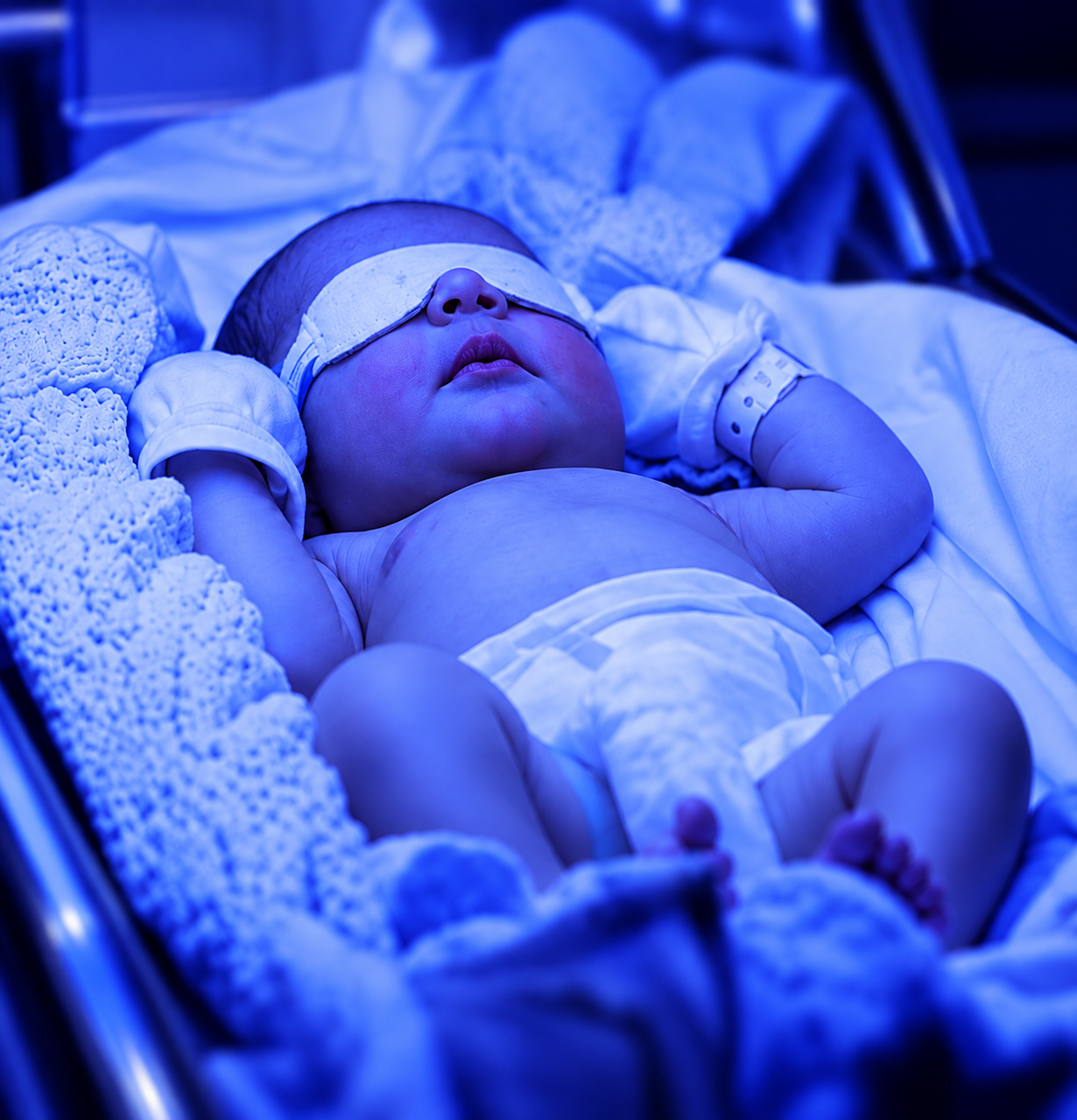
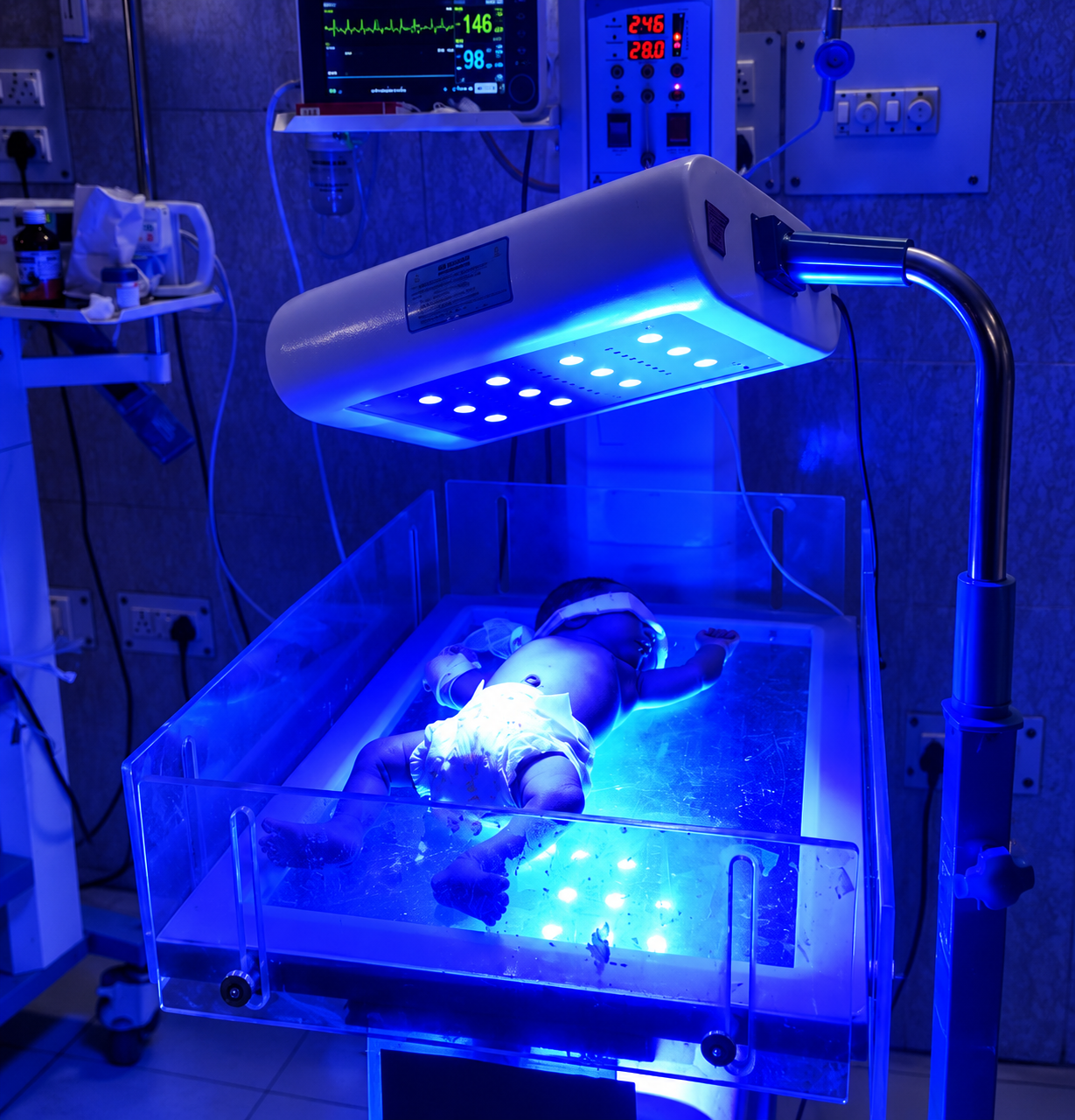
During treatment, the baby's skin is exposed to the appropriate phototherapy light while protecting the baby's eyes as required.
The amount of skin exposed and the positioning of the baby are managed according to the treatment setup. The healthcare team observes the baby throughout the process and may monitor feeding, activity and other aspects of the baby's condition.
Phototherapy may continue for a period determined by the baby's response rather than according to a fixed number of hours for every newborn.
Feeding remains an important part of caring for a newborn with jaundice.
Parents should follow the feeding plan advised by the healthcare team. Depending on the baby's situation, feeding may involve breastfeeding or another feeding approach recommended by the treating team.
Parents should tell the healthcare team if the baby is feeding poorly, is unusually difficult to wake for feeds or is having fewer wet nappies than expected.
Phototherapy is not simply started and stopped without assessment. The baby's response may be evaluated through repeat bilirubin measurements when clinically appropriate.
This approach helps keep treatment individualised rather than applying the same duration to every baby.
There is no single treatment duration that is suitable for every newborn.
Some babies may require a shorter period, while others may need longer treatment depending on their bilirubin level, age, response to treatment and underlying factors.
Parents should therefore be cautious about comparing their baby's treatment time with another baby's experience. A difference in treatment duration does not necessarily mean that one baby is doing better or worse.
Phototherapy is widely used for significant newborn jaundice. During treatment, the baby is observed by the healthcare team, and appropriate precautions are taken.
Parents may notice that the baby spends considerable time under the treatment light. This is expected because effective exposure is an important part of phototherapy.
Eye protection, appropriate positioning, feeding and clinical monitoring are among the practical aspects of treatment that healthcare professionals consider.
If parents notice anything unusual about the baby's feeding, behaviour or condition during treatment, they should bring it to the team's attention.
The decision to stop treatment is based on the baby's bilirubin level and overall situation. Once the healthcare team determines that continued phototherapy is no longer required, treatment can be discontinued.
In some babies, bilirubin may rise again after treatment. This is known as rebound hyperbilirubinemia . Whether another bilirubin measurement is required depends on the baby's individual risk and clinical circumstances.
Parents should therefore follow the recommended follow-up plan rather than assuming that the jaundice has permanently resolved immediately after the light is switched off.
If bilirubin does not respond as expected, the healthcare team may reassess the baby and consider why the level remains elevated.
The reason may not simply be that the treatment is “not working.†The baby's age, feeding, rate of bilirubin increase and possible underlying causes can all be relevant.
Further assessment may therefore be needed before deciding what should happen next.
Parents still have an important role while their baby receives phototherapy. Keeping the baby appropriately fed, observing behaviour and communicating changes to the healthcare team can support safe care.
It is also completely reasonable for parents to ask questions during treatment. For example:
Having clear answers can help parents understand the progress of treatment.
After treatment, parents should continue following the feeding and follow-up instructions provided by the healthcare team.
They should seek medical advice if jaundice appears to be worsening again or if the baby develops concerning changes such as poor feeding, unusual difficulty waking, reduced responsiveness or other significant changes in behaviour.
The aim is not simply to make the baby's skin look less yellow. The important goal is to ensure that the bilirubin level is managed appropriately and that the baby remains well.
When a newborn needs treatment for jaundice, parents usually want more than a treatment name. They want to know where the baby will be assessed, how the treatment decision is made, what they should ask, and what follow-up may involve. This final part focuses on the practical side of seeking newborn jaundice care at Surya Hospital and the questions parents may have before or after phototherapy.
At Surya Hospital, Puliyangudi, newborn jaundice treatment includes phototherapy when it is medically appropriate. The treatment plan should be based on the baby's bilirubin assessment and individual clinical circumstances rather than simply on how yellow the baby appears.
For parents, this means the consultation is not only about starting phototherapy. It is also an opportunity to understand the baby's bilirubin level, why treatment may be needed, how the baby will be monitored and what follow-up is appropriate.
71 A, Surya Hospital, 5th West Street, Karpaga Veethi, Opposite to T.N.S.T.C Bus Depot, Puliyangudi, Tenkasi - 627855
Newborn jaundice can look similar from the outside even when the reasons behind it are different. A careful assessment helps the healthcare team decide whether the baby needs observation, bilirubin monitoring or treatment.
Parents can make the consultation more useful by sharing relevant information such as:
This information gives the treating team useful context when evaluating the newborn.
One of the most important parts of newborn jaundice care is communication. Parents may hear that a baby's bilirubin level is “high†but may not know what that means for their particular baby.
Instead of focusing on a number alone, parents can ask how the result relates to the baby's age and other clinical factors.
Useful questions include:
Clear answers can help parents understand the reasoning behind the care plan.
If the baby has already been evaluated elsewhere, bringing available medical information can make the consultation more efficient.
Parents may bring previous:
Not every baby will require all of these documents, but having previous records available can help the healthcare team understand the baby's recent history.
Parents should seek prompt medical attention if a newborn with jaundice develops concerning changes such as poor feeding, unusual difficulty waking, reduced responsiveness or significant changes in behaviour.
Jaundice that appears very early, becomes noticeably worse or occurs together with other concerning symptoms should also be assessed by a healthcare professional.
The important principle is simple: when a newborn's condition seems different from usual, do not rely on home observation alone.
71 A, Surya Hospital, 5th West Street, Karpaga Veethi, Opposite to T.N.S.T.C Bus Depot, Puliyangudi, Tenkasi - 627855
Phototherapy is one form of treatment used for newborn jaundice when the bilirubin level reaches an appropriate treatment threshold. Newborn jaundice itself is a condition, while phototherapy is a medical treatment that can help reduce bilirubin.
No. Many newborns with mild jaundice may only need appropriate feeding, observation and bilirubin monitoring. Phototherapy is considered when the baby's bilirubin level and clinical circumstances indicate that treatment is appropriate.
No. The depth of yellow colouring does not reliably determine the bilirubin level. When measurement is required, the healthcare team uses an appropriate bilirubin assessment to guide treatment decisions.
Feeding remains an important part of newborn care during jaundice treatment. Parents should follow the feeding plan advised by the healthcare team and discuss any difficulty with breastfeeding or feeding with them.
There is no fixed duration for every baby. Treatment time depends on factors such as the baby's bilirubin level, age, clinical circumstances and response to treatment. The healthcare team determines when treatment can safely stop.
Bilirubin can rise again in some babies after phototherapy. This is why follow-up may be recommended depending on the baby's individual circumstances. Parents should follow the review or repeat-testing plan provided by the healthcare team.
Direct sunlight should not be considered a replacement for medically supervised phototherapy. If treatment is required, parents should follow the treatment recommended by the healthcare professional rather than attempting to treat significant jaundice at home with sunlight.
Contact a healthcare professional if the baby is unusually difficult to wake, feeding poorly or less responsive than usual. Sleepiness in a newborn should be considered together with feeding and other signs rather than being assumed to be a normal part of jaundice.
Ask why treatment is recommended, what the baby's bilirubin level is, how it will be monitored, how feeding will be managed and what follow-up is expected. Understanding these points can make the treatment process clearer and less stressful.
Surya Hospital in Puliyangudi provides phototherapy as part of newborn jaundice treatment when medically appropriate. Parents can discuss their baby's jaundice, bilirubin assessment and treatment requirements with the healthcare team.
Newborn jaundice care may involve more than simply treating the visible yellowing. Appropriate assessment, feeding support, bilirubin monitoring and follow-up can all form part of the overall care process.
If you are looking for phototherapy treatment in Puliyangudi, Tenkasi, speak with the Surya Hospital team about your baby's symptoms and previous bilirubin results to understand the appropriate next step.
If your baby has developed jaundice or you have been advised to consider phototherapy, contact Surya Hospital, Puliyangudi, for an appropriate medical assessment and treatment guidance.