


71 A, Suriya Hospital, Puliyangudi, Tenkasi - 627855
A cancer diagnosis can change the way patients and families think about the next stage of care. Questions often arise quickly: What type of cancer is it? Where did it begin? Has it spread? Is surgery necessary? What does the biopsy show? What happens after the operation?
Cancer surgery is not one standard procedure used for every patient. The need for surgery, its purpose and the type of operation considered depend on the individual diagnosis. Factors such as the type and location of cancer, stage, tumour characteristics, investigation findings and the person's overall health can influence treatment planning.
At Surya Hospital, Puliyangudi, patients with a confirmed diagnosis, suspicious growth or reports requiring surgical assessment can discuss their findings with the surgical team. The purpose of this consultation is to understand the available medical information and determine whether surgical management may be appropriate for the particular situation.
Cancer refers to a group of diseases involving abnormal cells that grow in an uncontrolled manner. Depending on the type, these cells may invade nearby tissues and, in some cancers, spread to other parts of the body.
An important point for patients to understand is that cancer is not a single disease. Different cancers can originate in different organs and tissues, behave differently and require different approaches to evaluation and treatment. Breast cancer, colorectal cancer, stomach cancer, liver cancer and lung cancer, for example, are not interchangeable conditions.
This is why information about another person's cancer treatment should not automatically be applied to a different patient. The diagnosis needs to be understood first, followed by an assessment of the factors that affect treatment planning.
Cancer surgery may be considered when a cancerous growth or affected tissue can be appropriately evaluated for surgical management and an operation is clinically suitable.
These factors help the surgeon understand whether an operation has a role in the patient's treatment plan.
The important distinction is that having cancer does not automatically mean that surgery is the next step. Surgery may be appropriate for some cancers and situations, while other treatment approaches may be considered depending on the diagnosis and stage.
No. Cancer surgery is not required for every person diagnosed with cancer.
Whether surgery is appropriate can depend on the cancer type, stage, tumour location, whether the tumour can be safely removed and the patient's overall health.
This is particularly important when patients search online for a treatment based only on the name of a cancer. A general description cannot determine whether an individual needs an operation.
A surgical consultation allows the doctor to consider the actual medical information rather than making a decision from symptoms or a general diagnosis alone.
These questions can help patients understand the reasoning behind the proposed treatment.
The first step in cancer care is understanding what the abnormality actually represents.
Symptoms such as a lump, unexplained weight loss, persistent pain or unusual bleeding can occur for different reasons. They may need medical evaluation, but they do not by themselves establish that a person has cancer. Many possible cancer warning signs can also occur with non-cancerous conditions.
Once a diagnosis is established, the treating team can consider the characteristics of the cancer and the extent of the disease.
This approach prevents an important misconception: the presence of a suspicious growth and the decision to perform cancer surgery are not the same thing. A patient may first require additional evaluation before a treatment pathway can be discussed properly.
A biopsy involves taking a sample of tissue or cells for laboratory examination.
The examination can help establish the nature of an abnormal growth and provide information that may be important when planning treatment.
For a patient with a suspicious lump or growth, a biopsy can therefore provide information that symptoms and physical examination alone may not establish.
If you have already undergone a biopsy, keep the report safely and bring it to your surgical consultation. The pathology information can form an important part of the discussion about what should happen next.
Not every unusual symptom or lump represents cancer. However, persistent, unusual or progressively worsening changes should not simply be ignored.
These symptoms are not a diagnosis of cancer. Their significance depends on the individual circumstances, and appropriate medical assessment is the way to determine what may be causing them.
Once cancer has been diagnosed, understanding its stage can provide information about how extensive the disease is.
Staging can take into account information about the primary tumour, nearby lymph nodes and possible spread to other parts of the body. This information can influence which treatment options are considered.
For patients, this explains why two people with what sounds like the same type of cancer may not receive identical treatment. Differences in tumour characteristics, stage, pathology findings, overall health or previous treatment can lead to different treatment plans.
Therefore, patients should focus on understanding their own diagnosis and treatment reasoning, rather than comparing their proposed care with someone else's experience.
A surgeon needs an accurate picture of the patient's condition before discussing whether an operation may be appropriate.
Having these records available can make the consultation more productive. Instead of describing the history from memory, the patient can provide the actual reports for review.
At Surya Hospital, patients who have already undergone a biopsy or scan and have been advised to seek surgical evaluation are encouraged to bring their reports to the consultation.
The purpose of cancer surgery depends on the specific diagnosis and the reason the operation is being considered.
A surgical plan should therefore be discussed in terms of what the operation is intended to achieve for that particular patient rather than simply focusing on the procedure's name.
Understanding the reason for an operation is as important as knowing the name of the procedure. This helps patients understand the treatment as a complete process rather than viewing the operation as an isolated event.
No. The surgical approach depends on the cancer and the individual clinical situation.
The operation required for one type of cancer may be completely different from that used for another. Even within the same broad cancer category, tumour location, extent and other findings can influence the surgical plan.
At Surya Hospital, cancer surgery is included within the hospital's general and laparoscopic surgical services, with the appropriate procedure determined according to the patient's diagnosis and individual clinical assessment.
Patients do not need to make assumptions based solely on information found online. The most useful next step is to take the available medical information to a qualified healthcare professional and ask why a particular treatment is being considered for your diagnosis.
Once the diagnosis and available investigation findings are understood, the next question is whether surgery has a role in the patient's care and, if so, what type of operation may be appropriate.
Cancer surgery planning is not based on the tumour name alone. The surgeon needs to consider the location and extent of the cancer, available pathology findings, imaging reports, previous medical history and the patient's general health. These factors help determine whether surgical treatment can be considered and what approach may be suitable.
For this reason, patients should expect the treatment discussion to be individualized. A procedure that may be appropriate for one person may not be suitable for another, even when their diagnoses appear similar.
A cancer surgery consultation is an opportunity to review the available information and understand the possible next steps.
The consultation should also give patients an opportunity to ask questions. Understanding why an operation is being proposed can be just as important as understanding the name of the operation.
If you have already undergone investigations, bring the relevant documents to your appointment.
If you have several reports from different appointments, keeping them together can make it easier for the treating doctor to review the sequence of investigations and treatment.
The question is not simply whether a tumour exists. The more important question is whether surgical management is appropriate for that particular diagnosis.
The final decision should be made by the treating medical team after reviewing the patient's individual information.

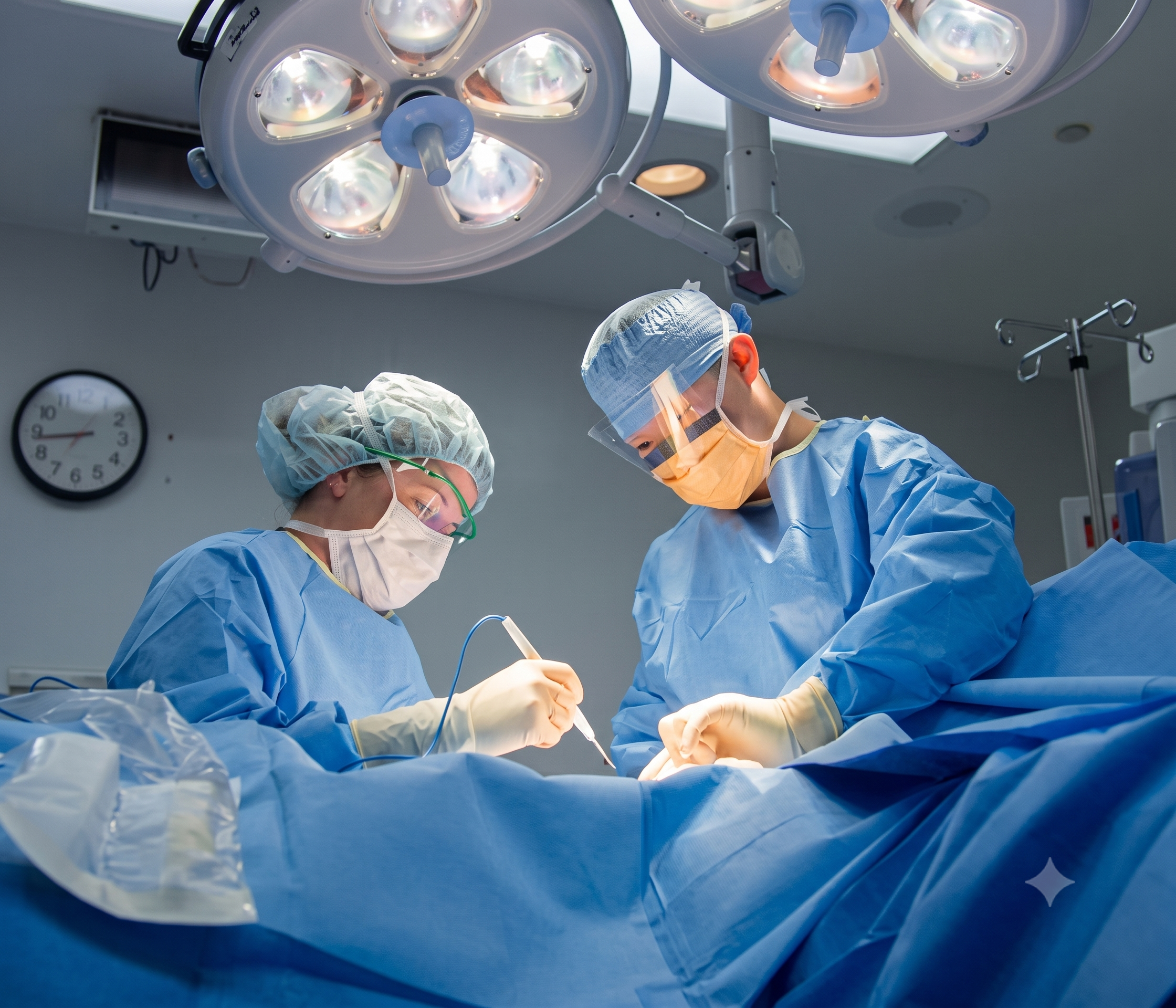
No. The surgical approach depends on the individual cancer and the procedure required.
Some operations may be performed using a conventional open approach, while selected procedures may be possible using minimally invasive techniques. The appropriate method depends on factors such as the location and extent of the tumour and the operation that needs to be performed.
The decision should be based on the patient's clinical circumstances rather than choosing an approach simply because it sounds less invasive.
In selected situations, cancer surgery may be possible using a laparoscopic approach. Laparoscopic surgery uses small incisions, a camera and specialized surgical instruments. However, it is not automatically suitable for every cancer.
Laparoscopic surgery may be possible for selected cancers depending on the tumour's location, extent and the operation required.
This distinction is important because the goal is not to select a particular technique first and then fit the patient into it. The diagnosis and required operation come first; the surgical approach is then considered.
A clear conversation can help patients understand the reasoning behind the proposed treatment. Patients should not assume every condition requires the same laparoscopic approach; the appropriate method depends on diagnosis, medical history, investigation findings and surgical assessment.
Preparation varies according to the planned procedure and the patient's medical circumstances.
Before surgery, the medical team may need to review the patient's available reports, medical history and current medicines. Additional investigations may be required depending on the clinical situation.
Do not stop prescribed medicines or change treatment instructions on your own. Any changes needed before surgery should be discussed with the treating medical team.
A patient's medical history provides context that cannot be obtained from a scan or biopsy report alone. For example, previous operations, existing medical conditions, medicines and earlier treatment may all be relevant when planning an operation.
This is why bringing complete records to the consultation is useful. It allows the surgeon to consider the patient's situation as a whole rather than focusing on one report in isolation.
Patients often remember only a few questions during a consultation, particularly after receiving a cancer diagnosis. Writing questions down beforehand can help.
The objective is not to make the consultation longer for its own sake. It is to make sure the patient understands the major decisions involved.
The operation is only one stage of cancer-related surgical care.
After surgery, attention shifts toward recovery, wound care, symptom management, pathology review and follow-up. The exact recovery experience varies according to the operation, the organ involved, the extent of surgery and the patient's overall health.
Some patients may gradually return to their normal routine, while others may require a longer recovery period. It is therefore not useful to compare recovery directly with another patient's experience.
Recovery can involve several aspects of care rather than simply waiting for the surgical wound to heal.
The expected recovery period depends on the individual operation. A surgeon can provide more specific guidance after considering the procedure and the patient's circumstances.
Two patients can undergo similar procedures and still experience different recoveries. Differences in overall health, the extent of surgery, the individual diagnosis and other medical factors can influence how quickly someone feels better and returns to normal activities.
A slower recovery does not necessarily mean that something is wrong, but symptoms that are severe, worsening or concerning should be discussed with the medical team.
The final pathology report can be an important part of follow-up after cancer surgery.
The removed tissue may undergo laboratory examination, and the findings can provide additional information about the tumour. These results may help the treating team determine whether additional treatment or closer monitoring should be considered.
This is why the treatment journey does not necessarily end when the operation is completed. Patients should ask when the pathology results will be available and when they will be discussed with the treating doctor.
Follow-up provides an opportunity to assess recovery and review information that becomes available after the operation.
There is no single follow-up schedule that applies to every cancer. The appropriate plan depends on the individual diagnosis and should be discussed with the treating medical team.
Cancer recurrence is possible in some patients, and removing a tumour does not mean that recurrence can never occur.
The possibility of recurrence varies according to the type and stage of cancer and other individual factors. Appropriate follow-up is therefore an important part of post-treatment care.
Patients should avoid using another person's recurrence experience to predict what will happen in their own case. Instead, ask the treating doctor what follow-up is appropriate for your diagnosis and what changes should be reported.
Recovery should generally be monitored according to the instructions provided by the surgical team.
These symptoms do not by themselves identify the cause. A healthcare professional can assess whether the symptom is part of the expected recovery process or requires further evaluation.
For patients and families, it can be tempting to think of cancer surgery as one event: diagnosis, operation and then recovery.
Each stage can provide information that influences the next. Understanding this sequence can help patients prepare better questions and have a more meaningful discussion with their treating team.
Most importantly, patients should not make treatment decisions by comparing their diagnosis with another person's cancer journey. The appropriate treatment can differ even when two people appear to have the same broad cancer type because their stage, pathology, tumour characteristics, health and previous treatment may be different.
A cancer diagnosis often involves more than one decision. Patients may need to understand their reports, clarify whether surgery has a role, discuss the proposed procedure and know what follow-up may be required afterwards.
At Surya Hospital, Puliyangudi, Cancer Surgery is included within the hospital's confirmed general and laparoscopic surgical services. The surgical team can review available medical information when a patient has a cancer diagnosis, biopsy result, scan finding or other condition requiring surgical assessment.
The focus of a cancer surgery consultation is not to assume that an operation is required. Instead, the available diagnosis and investigation findings can be discussed to understand whether surgical management may be appropriate for that individual patient.
This approach is particularly important because cancer treatment decisions can differ substantially between patients. The type of cancer, stage, tumour characteristics, location, pathology findings and overall health can all influence the treatment pathway.
If you have already been diagnosed with cancer or have undergone investigations for a suspicious growth, bring the available medical records to your consultation.
These reports help the surgeon understand the available clinical information rather than relying only on a patient's recollection. If another doctor has recommended a surgical opinion, bringing that recommendation and the related reports can also help make the consultation more focused.
Cancer surgery at Surya Hospital is associated with Dr. M. Sivasubramanian, M.S., D.MAS., F.MAS., FIAGES, FALS, F.ART, General & Laparoscopic Surgeon and Managing Director, Surya Hospital.
He has 10+ years of experience in surgical care.
For patients looking for a Cancer Surgeon in Puliyangudi or seeking a surgical consultation in the Tenkasi region, the first step is an individual assessment of the diagnosis and available medical information.
The appropriate treatment should be determined from the patient's clinical findings rather than from a general online description of cancer surgery.
Choosing a surgeon is not simply about finding someone who performs operations. Patients should have an opportunity to understand the reasoning behind the proposed treatment.
These discussions can help patients participate more confidently in treatment decisions without relying on comparisons with other people's cancer experiences.
One of the most important considerations in cancer surgery is that there is no universal treatment plan for every patient.
Two people may have the same broad cancer type but still require different approaches because their disease may differ in stage, location, pathology, tumour characteristics or extent. Their general health and previous treatment may also influence the plan.
This means that patients should be cautious about assuming that a relative's treatment for the same cancer will also be appropriate for them. That conclusion may not be correct.
A more useful question is: why is this treatment being recommended for my particular diagnosis? This shifts the discussion from comparing experiences to understanding the medical reasoning behind an individual treatment plan.
For patients living in Puliyangudi, Tenkasi and nearby areas, having access to a local surgical consultation can make it easier to discuss reports and attend follow-up appointments.
Surya Hospital provides general and laparoscopic surgical services in Puliyangudi, including Cancer Surgery as one of its confirmed surgical services.
Patients who have already undergone a biopsy or scan can bring those reports for review during consultation.
Patients exploring cancer surgery may also find the following Surya Hospital surgical services relevant depending on their diagnosis:
71 A, Surya Hospital, 5th West Street, Karpaga Veethi, Opposite to T.N.S.T.C Bus Depot, Puliyangudi, Tenkasi - 627855
Cancer surgery is an operation considered for selected cancer-related conditions when surgical management is appropriate. Whether surgery is suitable depends on the type, location and extent of cancer, pathology findings, stage and the patient's overall medical circumstances.
No. Surgery is appropriate for some cancers but not for every cancer or every patient. The decision can depend on the cancer type, stage, tumour location, whether it can be safely removed and the patient's overall health.
A biopsy involves examining a sample of tissue or cells in a laboratory. It can help establish the nature of an abnormal growth and provide information that may be important for treatment planning.
Staging helps describe how extensive the cancer is. Information about the tumour, nearby lymph nodes and possible spread can influence which treatment approaches are considered.
For selected cancers, laparoscopic surgery may be possible. However, it is not appropriate for every cancer. The decision depends on factors such as tumour location, extent and the operation required.
No. Cancer recurrence can occur in some patients. The possibility varies according to the cancer type, stage and other individual factors, which is why appropriate follow-up remains important.
Bring available biopsy or pathology reports, scan reports, previous medical records, laboratory results and a current list of medicines. Previous treatment records may also be useful where applicable.
There is no single recovery period for all cancer operations. Recovery depends on the type and extent of surgery, the organ involved, the patient's health and other individual factors.
Yes. Differences in stage, tumour characteristics, pathology findings, overall health and previous treatment can lead to different treatment plans, even when two patients have the same broad cancer type.
Patients seeking a cancer surgery consultation in Puliyangudi can consult the surgical team at Surya Hospital, Tenkasi, where available reports can be reviewed and the appropriate next step discussed.
A cancer diagnosis can leave patients with many unanswered questions. Reading reliable information can help you prepare, but online information cannot determine the right treatment for an individual diagnosis.
If you have a confirmed cancer diagnosis, biopsy or pathology report, scan findings or a suspicious growth requiring surgical assessment, bring your available medical records and discuss the findings with a qualified healthcare professional. For Cancer Surgery in Puliyangudi and Tenkasi, consult Surya Hospital.
At Surya Hospital, Puliyangudi, patients can discuss their diagnosis, available reports, possible surgical management, recovery considerations and follow-up with the surgical team.