


71 A, Suriya Hospital, Puliyangudi, Tenkasi - 627855
Gallbladder stones, medically known as cholelithiasis, are hardened deposits that can form inside the gallbladder. Some gallstones may remain without causing symptoms, while others can lead to abdominal pain, nausea, vomiting or other gallbladder-related problems.
At Surya Hospital, Puliyangudi, Tenkasi, patients can consult the General & Laparoscopic Surgery team for evaluation and treatment of gallbladder stone conditions. When gallstones cause symptoms or complications and surgery is recommended, cholecystectomy, or gallbladder removal surgery, may be considered. A laparoscopic approach may be appropriate for selected patients depending on their condition.
If you are searching for gallbladder stone treatment in Puliyangudi, cholelithiasis treatment in Puliyangudi, or a gallstone surgeon in Puliyangudi, understanding the condition, symptoms, diagnosis and available treatment options can help you prepare for a surgical consultation.
Cholelithiasis is the medical term for gallstones. Gallstones are solid particles that develop inside the gallbladder when substances present in bile form hardened deposits.
Gallstones can vary in size and number. A person may have a single gallstone or multiple stones.
Importantly, having gallstones does not always mean that surgery is immediately required. Some people have gallstones without significant symptoms, while others develop recurring pain or complications that require medical or surgical treatment.
The appropriate treatment depends on the individual's condition.
The gallbladder is a small organ located beneath the liver. Its main role is to store and concentrate bile, a digestive fluid produced by the liver.
Bile helps the body digest fats. When food enters the digestive system, bile is released from the gallbladder through the bile ducts.
Gallstones can develop within the gallbladder and, in some cases, may interfere with the normal flow of bile.
Understanding the role of the gallbladder helps explain why gallstones can sometimes cause pain and other digestive symptoms.
Gallstones can develop when the substances that make up bile become imbalanced and form solid particles.
Several factors can contribute to gallstone formation.
Gallstone formation is not caused by one single factor in every patient.
Some people may develop gallstones without an obvious cause, while others may have several contributing risk factors.
Gallstones are generally classified according to their composition.
These are associated with excess cholesterol in bile and are a common type of gallstone.
These stones contain higher amounts of substances derived from bilirubin and can occur in association with certain medical conditions.
The type of gallstone is not something patients can usually determine from symptoms alone. Diagnosis and medical evaluation are needed to understand the condition.
Gallstones can develop through a combination of factors rather than one specific cause.
Factors associated with an increased likelihood of gallstones can include:
Having one or more of these factors does not mean that a person will definitely develop gallstones.
Similarly, gallstones can occur in people who do not have obvious risk factors.
Gallstones can affect different age groups and individuals, although certain factors can increase the likelihood of developing them.
Risk can be influenced by:
The likelihood of gallstone formation can increase with age.
A family history of gallstones may contribute to an increased risk.
Significant weight gain or rapid weight loss can influence gallstone formation.
Certain metabolic conditions can be associated with gallstones.
Some medical conditions can affect bile composition or gallbladder function.
Gallstone risk varies from person to person and may involve several factors together.
Gallstones may cause no symptoms, but symptomatic gallstones can cause pain and digestive discomfort.
A common symptom is pain in the upper right or upper middle part of the abdomen. The pain may occur after meals and can sometimes be significant.
Symptoms can vary considerably between patients.
Not every episode of abdominal pain is caused by gallstones. Other digestive and abdominal conditions can produce similar symptoms, which is why proper medical evaluation is important.
Gallstone-related pain can occur in the upper abdomen and may sometimes be felt toward the back or shoulder region.
Some people experience pain after eating, particularly following meals, while others may experience symptoms at different times.
The intensity and duration of pain can vary.
Because several conditions can cause abdominal pain, symptoms alone cannot confirm cholelithiasis. A doctor may recommend examination and appropriate investigations to establish the diagnosis.
Yes. Gallstone symptoms do not necessarily occur continuously.
A person may experience episodes of abdominal pain or discomfort followed by periods without significant symptoms.
Recurring symptoms should not simply be ignored, particularly if they become more frequent, severe or are accompanied by other symptoms.
Medical evaluation can help determine whether gallstones are responsible and whether treatment is required.
Yes. Some people have gallstones without experiencing noticeable symptoms.
Gallstones may sometimes be discovered incidentally during an ultrasound or another investigation performed for a different reason.
Whether treatment is necessary depends on the patient's circumstances.
The presence of gallstones alone does not automatically mean that gallbladder removal surgery is required. A doctor considers the patient's symptoms, clinical findings, complications and other relevant factors before recommending treatment.

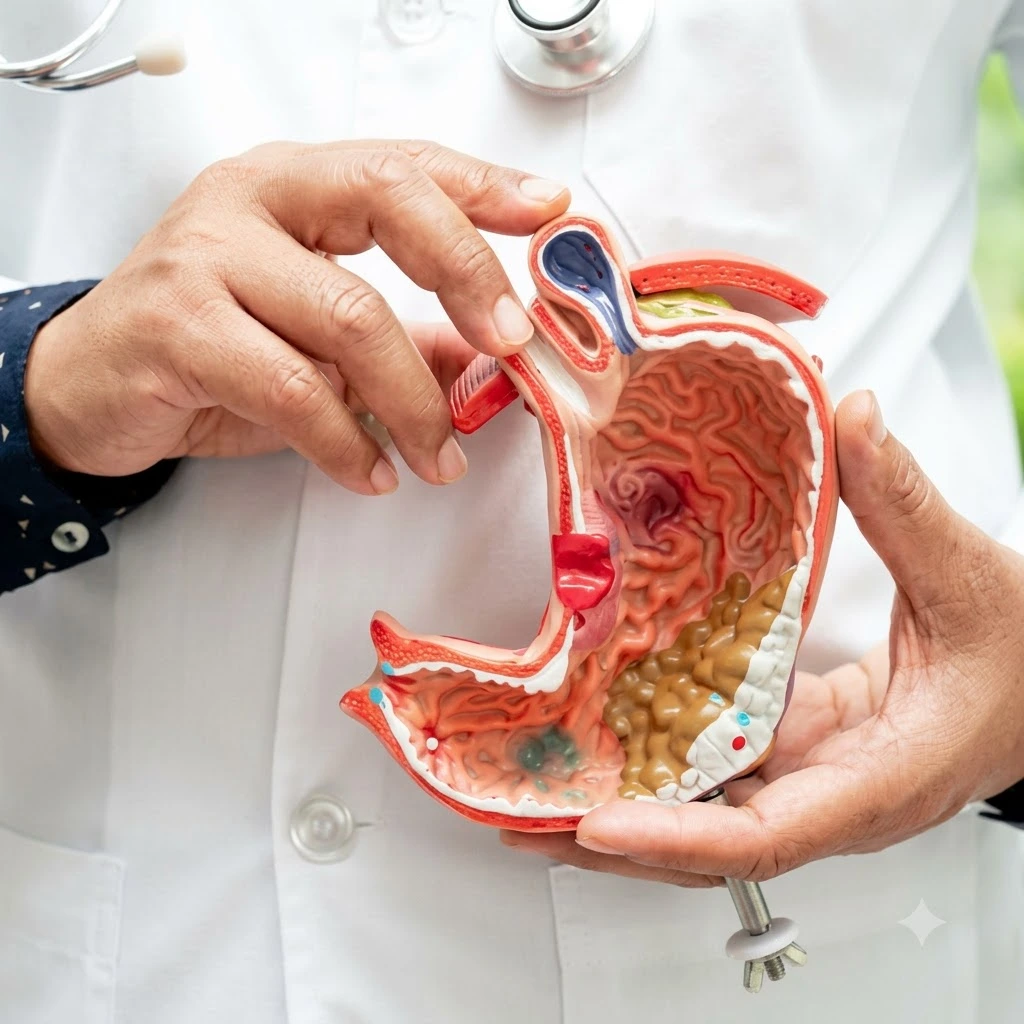
Gallstones may require treatment when they cause significant symptoms, complications or other clinical problems.
Some patients may only need observation, while others may be advised to undergo surgical treatment.
If surgery is recommended, cholecystectomy involves removing the gallbladder rather than simply removing individual stones.
Yes.
Gallstones is the commonly used term, while cholelithiasis is the medical term used to describe the presence of stones in the gallbladder.
Therefore:
Gallstones = Cholelithiasis
Understanding both terms can be useful when reading scan reports, medical records or discussing treatment with a surgeon.
Gallstones can sometimes be associated with inflammation of the gallbladder, known as cholecystitis.
This is different from simply having gallstones without inflammation.
A patient with gallstones may therefore have:
Cholelithiasis → Gallstones
or may develop:
Gallstones → Gallbladder inflammation / Cholecystitis
The distinction is clinically important because symptoms, urgency and treatment decisions can differ.
Gallstones can sometimes lead to complications, particularly when a stone interferes with the normal flow of bile.
Not every patient with gallstones develops complications.
However, persistent or severe symptoms should be evaluated rather than managed solely through self-treatment.
If you already have an ultrasound report showing gallstones, take the report to your consultation so the surgeon can consider it along with your symptoms and clinical findings.
Severe or persistent abdominal pain, particularly when accompanied by symptoms such as fever, repeated vomiting, yellowing of the eyes or skin, marked weakness or other concerning changes, should receive prompt medical attention.
These symptoms can sometimes indicate a complication requiring urgent assessment.
Do not delay medical evaluation when abdominal symptoms are severe or rapidly worsening.
The evaluation generally begins with understanding the patient's symptoms and medical history.
The doctor may consider:
Symptoms → Physical examination → Medical history → Ultrasound/USG → Blood tests or other investigations when required
An ultrasound can help identify gallstones and assess the gallbladder.
Additional investigations may be recommended depending on the symptoms and clinical findings.
The purpose of evaluation is not only to identify gallstones but also to understand whether they are responsible for the patient's symptoms and whether treatment is required.
One of the most important things for patients to understand is that finding gallstones does not automatically mean that gallbladder removal surgery is required for everyone.
A surgeon considers the complete clinical picture.
For a patient with no significant symptoms, the approach may differ from that for someone experiencing repeated painful episodes or complications.
When surgery is clinically indicated, the surgeon may recommend cholecystectomy, which is the surgical removal of the gallbladder.
For selected patients, this may be performed using a laparoscopic approach.
Gallbladder removal surgery is called cholecystectomy. It is a surgical procedure in which the gallbladder is removed when treatment is indicated.
The surgeon may recommend cholecystectomy for appropriately selected patients with symptomatic gallstones or certain gallstone-related problems.
There are different surgical approaches, including laparoscopic surgery and open surgery.
The choice depends on the patient's condition and the surgeon's assessment.
Yes, laparoscopic cholecystectomy may be considered for suitable patients who require surgical treatment for gallstone-related conditions.
Laparoscopic surgery uses small surgical openings, a camera and specialised instruments.
The surgeon evaluates the patient's condition before deciding whether a laparoscopic approach is appropriate.
This is why a consultation with a general and laparoscopic surgeon is important when planning gallbladder stone treatment.
Gallstones are usually evaluated through a combination of symptoms, medical history, physical examination and diagnostic investigations. Ultrasound or USG is commonly used to examine the gallbladder and identify gallstones.
Finding gallstones is only one part of the evaluation. The surgeon also needs to determine whether the stones are responsible for the symptoms and whether treatment is necessary.
Ultrasound (USG) can help identify gallstones and assess the gallbladder. It is commonly used when a patient has symptoms that may be related to gallbladder disease.
An ultrasound report may provide information about:
Your doctor may recommend additional investigations depending on your symptoms and the findings from the initial assessment.
If you already have a USG scan report showing gallstones, take it with you during your surgical consultation.
No. Not every patient with gallstones requires gallbladder removal surgery.
The treatment decision depends on whether the gallstones are causing symptoms or complications and on the patient's overall clinical condition.
For patients who require surgical treatment, cholecystectomy may be recommended.
The appropriate management of gallstones depends on the patient's individual circumstances.
Some people with gallstones that are not causing significant symptoms may not require immediate surgery. In such situations, the doctor may recommend observation or follow-up based on the clinical assessment.
However, when gallstones are causing significant symptoms or complications and surgical treatment is considered appropriate, removing the gallbladder through cholecystectomy is a commonly used surgical approach.
The treatment decision should be made after medical evaluation rather than based only on the presence or size of a stone.
Gallbladder removal may be recommended when gallstones cause significant symptoms or certain complications and the surgeon determines that surgery is appropriate.
Your surgeon will consider your symptoms, reports and overall health before recommending surgery.
Cholecystectomy is the surgical removal of the gallbladder.
When gallstones are causing symptoms or complications and surgery is recommended, removing the gallbladder can be used to treat the underlying gallbladder condition.
The choice of approach depends on the patient's condition and the surgeon's assessment.
A common question patients ask is why the entire gallbladder may be removed rather than simply taking out the stones.
Gallstones develop within the gallbladder, and removing the gallbladder addresses the organ in which the stones formed. Cholecystectomy therefore involves removal of the gallbladder rather than simply removing individual stones from it.
The exact treatment approach depends on the patient's diagnosis and clinical circumstances.
Laparoscopic cholecystectomy is a minimally invasive procedure used to remove the gallbladder through small surgical openings.
A laparoscope provides a camera-assisted view of the surgical area, while specialised instruments are used to perform the operation.
For appropriately selected patients, laparoscopic gallbladder removal may be considered when surgery is recommended for symptomatic gallstones or other gallbladder-related conditions.
At Surya Hospital, Lap Cholecystectomy is among the listed surgical services.
The exact procedure varies according to the patient's condition, but laparoscopic cholecystectomy generally involves several stages.
The surgeon reviews the diagnosis, investigation reports, medical history and suitability for surgery.
Appropriate anaesthesia is administered according to the surgical and anaesthetic plan.
Small openings are made to allow access for the laparoscope and surgical instruments.
The laparoscope provides a view of the surgical area on a monitor.
Specialised instruments are used to carefully separate and remove the gallbladder.
The instruments are removed and the surgical openings are closed.
The patient is monitored after surgery and receives instructions for recovery and follow-up.
The actual surgical approach may vary depending on anatomy, previous surgery, inflammation and findings during the operation.
Before surgery, the medical team may provide specific preparation instructions.
Tell your doctor about all medicines you take and any known allergies or previous medical problems.
Do not stop prescribed medication unless your treating medical team advises you to do so.
During laparoscopic gallbladder removal, the surgeon accesses the abdomen through small openings and uses a camera and specialised instruments.
The gallbladder is separated carefully and removed through the surgical access points.
The procedure is performed under anaesthesia, followed by post-operative monitoring.
In some situations, the surgeon may determine that an open surgical approach is more appropriate. The final approach depends on the patient's condition and surgical findings.
After surgery, the medical team monitors your recovery and provides instructions regarding medicines, diet, wound care and activity.
Your recovery experience can vary depending on the procedure and your individual health.
Follow the instructions provided by your treating team regarding medicines, wound care, diet, activity and follow-up.
Recovery after gallbladder removal varies from person to person.
Your surgeon can provide more specific guidance about returning to work, exercise and routine activities after your procedure.
Yes, gallbladder removal is possible, and the digestive system can continue to function after the gallbladder has been removed.
The liver continues to produce bile after surgery. Without the gallbladder, bile is no longer stored there and instead flows through the bile ducts into the digestive system.
Your doctor can explain what to expect after gallbladder removal based on your individual circumstances.
When laparoscopic cholecystectomy is appropriate, the minimally invasive approach may offer potential advantages compared with some open procedures.
These are potential benefits and do not mean that every patient will have the same recovery experience.
Like other surgical procedures, cholecystectomy can involve risks.
The specific risks depend on the procedure and the patient's individual circumstances.
Your surgeon should explain the risks that are particularly relevant to your planned operation before surgery.
Yes. In some circumstances, a laparoscopic gallbladder operation may need to be converted to open surgery.
The surgeon makes this decision based on the findings during the operation and the need to proceed safely.
Although laparoscopic cholecystectomy may be suitable for many appropriately selected patients, it is not automatically the correct approach for everyone.
The surgical approach should be selected according to the patient's clinical situation.
Gallstones cannot form inside a gallbladder that has been removed. However, problems involving the bile ducts can have different causes and should be evaluated if symptoms occur after surgery.
If you develop persistent or new abdominal symptoms after gallbladder removal, discuss them with your doctor.
A consultation is an opportunity to understand your diagnosis and treatment plan.
Having these questions ready can make your consultation more informative and help you understand the proposed treatment.
Also tell the surgeon about any previous abdominal surgery, allergies and existing medical conditions.
If you have been diagnosed with gallstones (cholelithiasis) or are experiencing recurring symptoms that may be related to the gallbladder, a surgical consultation can help determine whether treatment is required.
At Surya Hospital, Puliyangudi, Tenkasi, patients can consult the General & Laparoscopic Surgery team for evaluation and treatment of gallbladder stone conditions.
When gallstones cause symptoms or complications and surgical treatment is recommended, cholecystectomy (gallbladder removal) may be considered. For appropriately selected patients, the gallbladder may be removed through a laparoscopic cholecystectomy approach.
The hospital's listed surgical services include General & Laparoscopic Surgery, Lap Cholecystectomy, Lap Appendectomy and Hernia Treatment.
Cholelithiasis means the presence of gallstones in the gallbladder. Treatment depends on whether the stones are causing symptoms or complications and on the patient's overall clinical condition.
The treatment plan is determined after evaluating the individual patient.
When surgical treatment is recommended for symptomatic gallstones or an appropriate gallbladder-related condition, cholecystectomy is the procedure used to remove the gallbladder.
The surgical approach may be:
Laparoscopic surgery uses small surgical openings, a camera and specialised instruments. The appropriate approach depends on the patient's condition, medical history, investigation findings and surgical assessment.
Patients searching for gallbladder removal surgery in Puliyangudi can discuss their diagnosis and treatment options with the General & Laparoscopic Surgery team at Surya Hospital.
Laparoscopic cholecystectomy is a minimally invasive procedure for removing the gallbladder.
It may be considered for suitable patients who require surgical treatment for symptomatic gallstones or certain gallbladder conditions.
The exact approach may vary depending on the patient's condition and findings during surgery.
Choosing a surgeon for gallstone treatment involves more than searching for a particular procedure.
If you are searching for a gallstone surgeon in Puliyangudi, gallbladder surgeon in Puliyangudi, or laparoscopic surgeon for gallstones in Puliyangudi, a consultation can help determine the appropriate treatment approach for your condition.
Dr. M. Sivasubramanian, M.S., D.MAS., F.MAS., FIAGES, FALS, F.ART, is a General & Laparoscopic Surgeon with 10+ years of experience and serves as the Managing Director of Surya Hospital.
Patients consulting Dr. M. Sivasubramanian for gallstone-related problems can discuss their symptoms, investigation reports and treatment options.
Treatment decisions are made according to the patient's individual clinical circumstances.
A consultation is particularly useful when you already have an ultrasound or other investigation report and want to understand what the findings mean for your treatment.
If you are visiting a gallbladder stone doctor in Puliyangudi, bring any available medical records.
Also tell your doctor about previous abdominal surgery, allergies and existing medical conditions.
Gallstone treatment should be based on the patient's complete clinical picture.
During evaluation, the surgeon may consider:
Symptoms + Medical History + Examination + USG/Investigations + Diagnosis + Treatment Options
This helps determine whether observation, medical management, surgery or another treatment approach is appropriate.
If surgery is recommended, the surgeon can explain why gallbladder removal is being considered and whether laparoscopic surgery is suitable.
Patients searching for gallbladder stone treatment in Tenkasi, gallstone surgery in Tenkasi, or cholelithiasis treatment in Tenkasi can consult the General & Laparoscopic Surgery team at Surya Hospital in Puliyangudi.
The treatment decision should be based on proper clinical evaluation rather than the presence of a gallstone alone.
If surgery is recommended, the surgeon can explain whether laparoscopic cholecystectomy or another surgical approach is appropriate.
Patients consulting for gallbladder stone problems may also explore related surgical services offered by the hospital:
71 A, Surya Hospital, 5th West Street, Karpaga Veethi, Opposite to T.N.S.T.C Bus Depot, Puliyangudi, Tenkasi - 627855
Patients coming for consultation can bring their previous medical reports, ultrasound scans, prescriptions and medication details.
Cholelithiasis is the medical term for gallstones. It refers to the presence of solid deposits or stones within the gallbladder.
No. Some people have gallstones without significant symptoms and may not require immediate surgery. Treatment depends on symptoms, complications and the patient's overall clinical condition.
When gallstones cause significant symptoms or certain complications and surgery is considered appropriate, cholecystectomy, or gallbladder removal, may be recommended.
Cholecystectomy is the surgical removal of the gallbladder. It can be performed using a laparoscopic or open approach depending on the patient's condition.
Laparoscopic cholecystectomy is a minimally invasive procedure used to remove the gallbladder through small surgical openings. A laparoscope and specialised instruments are used during the operation.
Treatment depends on the specific condition. When surgery is recommended for symptomatic gallstones, the usual surgical procedure is cholecystectomy, which removes the gallbladder rather than simply removing individual stones.
Yes. The liver continues to produce bile after gallbladder removal. Your doctor can explain what to expect after surgery and whether any temporary dietary changes may be appropriate during recovery.
Gallstones are evaluated using symptoms, medical history, physical examination and investigations. Ultrasound or USG is commonly used to identify gallstones and assess the gallbladder.
Symptoms can include upper abdominal pain, nausea, vomiting and digestive discomfort. Some people have gallstones without noticeable symptoms.
Yes. Gallstones can sometimes contribute to gallbladder inflammation, bile duct obstruction or other complications. Severe or persistent symptoms require medical evaluation.
No. Suitability depends on the patient's diagnosis, medical history, general health, investigation findings and surgical circumstances.
Yes. If the surgeon encounters circumstances that make continuing laparoscopically inappropriate, the procedure may be converted to open surgery.
Recovery varies depending on the surgical approach, complexity of the procedure, the patient's health and whether complications occur. Your surgeon can provide procedure-specific guidance.
Dietary requirements can vary during recovery. Your medical team can provide appropriate instructions based on your surgery and individual recovery. Temporary dietary adjustments may be recommended.
Gallstones cannot form inside a gallbladder that has been removed. However, new or persistent symptoms after surgery should be evaluated because problems involving the bile ducts or other digestive conditions can have different causes.
Patients can consult a General & Laparoscopic Surgeon for assessment of gallstone-related conditions. At Surya Hospital, patients can consult Dr. M. Sivasubramanian, M.S., D.MAS., F.MAS., FIAGES, FALS, F.ART, General & Laparoscopic Surgeon.
If you have been diagnosed with cholelithiasis, have recurring symptoms that may be related to gallstones, or have been advised to undergo gallbladder removal, consult the General & Laparoscopic Surgery team at Surya Hospital.
Dr. M. Sivasubramanian can evaluate your condition and discuss whether treatment is required and whether laparoscopic cholecystectomy may be appropriate.