


71 A, Suriya Hospital, Puliyangudi, Tenkasi - 627855
A hernia can start as a small lump that causes little trouble, but it may become uncomfortable during walking, lifting, coughing or other daily activities. Understanding what type of hernia you have, whether it needs treatment and which repair may be suitable can help you make a more informed decision.
At Surya Hospital, Puliyangudi, hernia patients can be evaluated based on their symptoms, the location and characteristics of the hernia, previous surgical history and overall health. When surgery is appropriate, the available repair approach can be discussed with the surgeon.
If you are searching for hernia treatment in Puliyangudi, hernia surgery in Puliyangudi, or a hernia surgeon in Puliyangudi, understanding the condition, symptoms, diagnosis and available treatment options can help you prepare for a surgical consultation.
A hernia occurs when tissue inside the body pushes through a weak area or opening in the surrounding muscle or connective tissue. Hernias commonly develop in the groin or abdominal wall and may appear as a swelling or lump.
You may notice the lump more clearly when standing, coughing, sneezing, lifting or straining. In some cases, it becomes less prominent when lying down.
Pain is not always present. Some people notice only a bulge, while others experience discomfort, pressure or pain that gradually becomes more noticeable.
A hernia is related to a weakness in the supporting tissue, so simply treating the visible lump does not address the underlying problem. A proper examination helps determine what type of hernia is present and what should be done next.
The abdominal wall normally holds the organs and tissues inside the abdomen. If an area becomes weak, pressure from inside the abdomen can push tissue through that point.
The weakness may have been present from birth or may develop over time. Repeated pressure on the abdominal wall can contribute to the development or enlargement of a hernia.
These factors do not mean that a hernia will definitely develop. In many cases, several factors may contribute together.
Hernias are named according to where the weakness occurs.
An inguinal hernia develops in the groin. It may cause a lump or discomfort that becomes more noticeable when standing, coughing or straining.
A femoral hernia occurs through an opening near the groin and upper thigh. Although less common, it can require particular attention because of its potential for complications.
An umbilical hernia develops around the navel when tissue pushes through a weak area near the belly button.
An epigastric hernia occurs through the upper part of the abdominal wall, between the breastbone and the navel.
An incisional hernia can develop at or near the site of an earlier abdominal operation when the abdominal wall remains or becomes weakened around the surgical scar.
Ventral hernia is a broader term used for certain hernias occurring through the front abdominal wall. Several abdominal-wall hernias can be described under this category.
The type and location of the hernia matter because treatment is not identical for every type.
The most recognizable sign is often a lump or swelling in the groin, abdomen or around the navel.
Some people have very few symptoms. Others may find that the discomfort gradually starts interfering with work, exercise or everyday activities.
A painless lump should not automatically be ignored. An examination can determine whether it is a hernia and whether it needs monitoring or treatment.
Coughing, lifting and straining temporarily increase pressure inside the abdomen. When a weak point is present in the abdominal wall, tissue can move toward that opening, making the swelling more obvious.
The change in the swelling can provide useful information during an examination, but it cannot determine the type or severity of the hernia by itself.
A structural abdominal-wall hernia generally does not permanently repair itself without addressing the underlying defect. However, this does not mean that every person with a hernia needs immediate surgery.
In selected patients with few or no symptoms, a doctor may discuss observation or watchful waiting. The decision depends on the type of hernia, symptoms, clinical findings and the person's circumstances.
If the hernia becomes painful, enlarges, affects daily activities or develops concerning features, surgical assessment may become more appropriate.
There is no single rule that applies to every hernia.
Your surgeon will consider the type, location and characteristics of the hernia, along with your symptoms and general health, before recommending observation or repair.
A hernia needs urgent medical attention if its contents become trapped or the blood supply to the trapped tissue may be affected.
These symptoms can occur with complications such as bowel obstruction or strangulation. Do not wait for the swelling or pain to settle on its own when these warning signs are present.
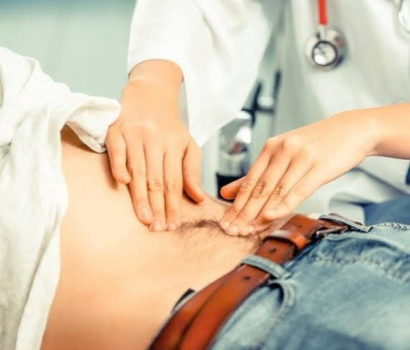
Many hernias can be identified during a physical examination. The doctor will usually ask about when the swelling appeared, whether it changes with activity and whether you experience pain or other symptoms.
The affected area may be examined while you are standing and lying down. The doctor may also assess what happens when you cough or strain, where appropriate.
An ultrasound or other imaging test may be recommended when the diagnosis is unclear or when additional information is needed.
The examination helps establish more than the presence of a lump. It can provide information about the hernia's location, size, reducibility and other features that may influence treatment.
No. Some hernias can be monitored, while others are better treated with surgical repair.
For selected minimally symptomatic inguinal hernias, particularly in men, watchful waiting can be discussed with a doctor. A symptomatic hernia may be more likely to require repair.
The decision is also influenced by the type of hernia. A management approach suitable for an uncomplicated inguinal hernia should not automatically be applied to an umbilical, femoral or incisional hernia.
Your surgeon can explain why observation or surgery is being recommended in your particular case.
Hernia repair is a surgical procedure that addresses the opening or weakened area through which tissue has protruded.
During the operation, the surgeon manages the hernia contents and repairs the abdominal-wall defect using a technique suited to the particular hernia.
In some repairs, surgical mesh is used to reinforce the weakened area and provide additional support.
The method chosen depends on the location and size of the defect, whether the hernia has been repaired previously and other patient-specific factors.
In an open hernia repair, the surgeon makes an incision over or near the affected area to reach the hernia directly.
The protruding tissue is managed as appropriate, and the defect in the abdominal wall is repaired. Mesh may be used when it is considered appropriate for the particular repair.
Open surgery remains an important option for many hernias. It is not automatically an inferior approach to laparoscopic surgery; the right choice depends on the individual hernia and patient.
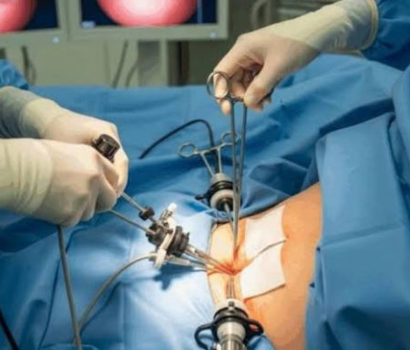
Laparoscopic hernia repair uses a camera and specialized surgical instruments introduced through small incisions to repair the hernia.
The surgeon views the operative area on a monitor and works through the small access points to address the defect. Depending on the type of hernia and technique, mesh may be used for reinforcement.
Laparoscopic repair can be suitable for selected patients and hernia types. Previous abdominal surgery, the location of the hernia, its characteristics and the patient's general health can influence whether this approach is appropriate.
Mesh is a surgical material that can reinforce the weakened abdominal wall during certain hernia repairs.
It can provide additional support to the repaired area rather than relying only on sutures.
Mesh is commonly used in many hernia procedures, but it is not correct to assume that exactly the same repair is appropriate for every patient. The decision depends on the hernia type, surgical technique and clinical circumstances.
During consultation, your surgeon can explain whether mesh is recommended and what role it would have in your repair.
There is no single technique that is best for every patient.
| Consideration | Open Repair | Laparoscopic Repair |
|---|---|---|
| Access | Direct incision near the hernia | Small abdominal incisions with camera-assisted access |
| Surgical view | Direct operative field | Magnified view through a camera |
| Suitability | Depends on hernia and patient factors | Depends on hernia, anatomy and patient factors |
| Recovery | Varies according to the operation | May allow quicker recovery for selected patients |
| Choice | Individualized | Individualized |
Your surgeon will consider the hernia itself, previous operations, general health and other relevant factors before recommending an approach.
A recurrent hernia may require a different strategy from a first-time repair because the previous operation can affect the tissues and available surgical planes.
Before surgery, the medical team may review your medical history, medicines, allergies, previous operations and relevant investigations.
If fasting or medication changes are required, follow the instructions provided by your hospital team. Do not stop prescribed medicines on your own.
Recovery is different for each person. It can depend on the type of hernia, the repair performed, the surgical approach and your general health.
Some discomfort around the operated area is expected during early healing. Your surgeon will advise you about wound care, medicines, physical activity and follow-up.
Rather than following an arbitrary recovery timetable, activity should be increased gradually according to your surgeon's instructions and how your recovery is progressing.
During the early recovery period, you may experience:
These symptoms do not necessarily indicate a complication. However, symptoms that become progressively worse should be discussed with the treating medical team.
Follow the discharge instructions carefully, particularly regarding wound care, medicines and physical activity.
Yes, a hernia can recur after repair. Surgery reduces the problem but cannot guarantee that another hernia will never develop.
Recurrence can be influenced by the original hernia, tissue strength, surgical technique, wound healing and individual health factors. Smoking, increased body weight and conditions that repeatedly increase abdominal pressure may also be relevant.
If a new swelling appears near a previous repair, it should be examined rather than assumed to be part of normal healing.
If you are visiting a hernia doctor in Puliyangudi, bring any previous medical records or scan reports that relate to the swelling.
These details can help make the consultation more informative.
At Surya Hospital, patients with suspected or diagnosed hernias can discuss their symptoms and treatment options with a general and laparoscopic surgeon.
The evaluation focuses on identifying the type and characteristics of the hernia and deciding whether observation or surgical repair is appropriate.
When surgery is indicated, open or laparoscopic hernia repair may be considered according to the patient's condition, the type of hernia and the surgical approach that is appropriate.
The aim is to give patients a clear understanding of their condition and the available treatment pathway rather than recommending the same procedure for every hernia.
Patients searching for hernia treatment in Puliyangudi, hernia surgery in Puliyangudi or hernia treatment in Tenkasi may have different needs depending on the type and location of their hernia.
A consultation can help establish whether the swelling is a hernia, whether further assessment is needed and whether repair should be considered.
For suitable patients, laparoscopic treatment can also be discussed as part of the available surgical options.
Dr. M. Sivasubramanian, M.S., D.MAS., F.MAS., FIAGES, FALS, F.ART , is a General & Laparoscopic Surgeon with 10+ years of experience and serves as the Managing Director of Surya Hospital.
Patients can discuss their hernia symptoms, examination findings and available treatment options with Dr. M. Sivasubramanian. The choice of treatment should be based on clinical evaluation and the characteristics of the individual hernia.
71 A, Surya Hospital, 5th West Street, Karpaga Veethi, Opposite to T.N.S.T.C Bus Depot, Puliyangudi, Tenkasi - 627855
A hernia develops when internal tissue pushes through a weak area or opening in surrounding muscle or connective tissue. It commonly appears as a lump in the groin or abdominal wall.
A structural hernia generally does not permanently close by itself. However, selected minimally symptomatic hernias may be monitored when a doctor considers observation appropriate.
No. Some hernias can be observed, while symptomatic or complicated hernias may require repair. The decision depends on the hernia type, symptoms and individual clinical factors.
It is a minimally invasive repair performed through small abdominal incisions using a camera and specialized instruments. Whether it is appropriate depends on the type of hernia and patient-specific factors.
No. Mesh is frequently used in many hernia repairs, but the decision depends on the type of hernia, the repair technique and the patient's circumstances.
Neither method is automatically better for everyone. The surgeon considers the hernia, previous surgery, health factors and other relevant considerations when selecting the approach.
Recovery varies between patients and procedures. Your surgeon will provide specific guidance about activity, wound care and returning to your usual routine.
Yes. Recurrence is possible after repair. The risk can be influenced by the type of hernia, tissue characteristics, healing and individual health factors.
Severe pain, a hard or very tender swelling, a lump that cannot be pushed back, persistent vomiting, abdominal swelling, difficulty passing stool or gas, or fever can indicate a complication and require urgent medical assessment.
A general surgeon can evaluate a suspected hernia and discuss whether observation or surgical repair is appropriate. At Surya Hospital, Dr. M. Sivasubramanian is a General & Laparoscopic Surgeon available for consultation.
If you have noticed a new lump in the groin, abdomen or around the navel, or have already been diagnosed with a hernia, professional evaluation can help you understand whether monitoring or repair is appropriate.